This is one of the most common questions we get from homeowners across Norfolk County: should I go with vinyl plank or tile? Both have gotten significantly better over the past decade. Both are durable, water-resistant, and available in styles that look genuinely beautiful. And both are things we install every week.
Here’s the honest answer: there’s no universally correct choice. There’s only the right choice for your specific room, your lifestyle, your budget, and your priorities. This guide will help you figure out which one that is.
What Is Luxury Vinyl Plank (LVP)?
Before we compare, it’s worth clarifying what we mean by vinyl plank — specifically luxury vinyl plank (LVP) or luxury vinyl tile (LVT). This isn’t the thin sheet vinyl or peel-and-stick tile of twenty years ago. Modern LVP is a multi-layer rigid core product that is genuinely difficult to distinguish from hardwood or stone at a glance, and in some cases even underfoot.
The core is typically made from stone plastic composite (SPC) or wood plastic composite (WPC), topped with a printed design layer and a protective wear layer. Quality products have a wear layer of 12 mil or more, which is thick enough to handle decades of normal use.
Side-by-Side Comparison
Durability
Tile wins for hardness. Porcelain tile is one of the hardest flooring materials you can put in a home — it won’t scratch, dent, or wear through. Drop a cast iron pan on it and the pan might dent before the tile does.
Vinyl plank wins for flexibility. LVP has a slight give underfoot that makes it more resistant to cracking from impact. It also handles minor subfloor movement better than tile, which can crack if the subfloor shifts.
The catch with tile: if a tile does crack — from a point impact or subfloor settling — the repair involves removing and replacing individual tiles, which can be difficult if the original tile is discontinued. LVP planks are somewhat easier to replace individually.
Water Resistance
Both are excellent — with conditions.
Quality LVP is 100% waterproof through the plank itself. However, water can still get into the seams between planks and reach the subfloor if there’s standing water for extended periods. In a bathroom where water regularly pools on the floor, tile is the safer choice.
Tile is inherently waterproof, but the grout is not unless it’s been sealed or you’re using epoxy grout. Unsealed sanded grout will absorb water over time, which can lead to mould and structural issues in wet areas.
Recommendation: For full bathroom floors and shower surrounds, use tile. For kitchens, laundry rooms, and basements where water exposure is incidental, either works well.
Comfort Underfoot
Vinyl plank wins clearly. LVP has cushioning built in, and many products are installed over an additional underlayment that adds further softness and sound absorption. Standing on LVP for an hour in the kitchen is noticeably more comfortable than standing on tile.
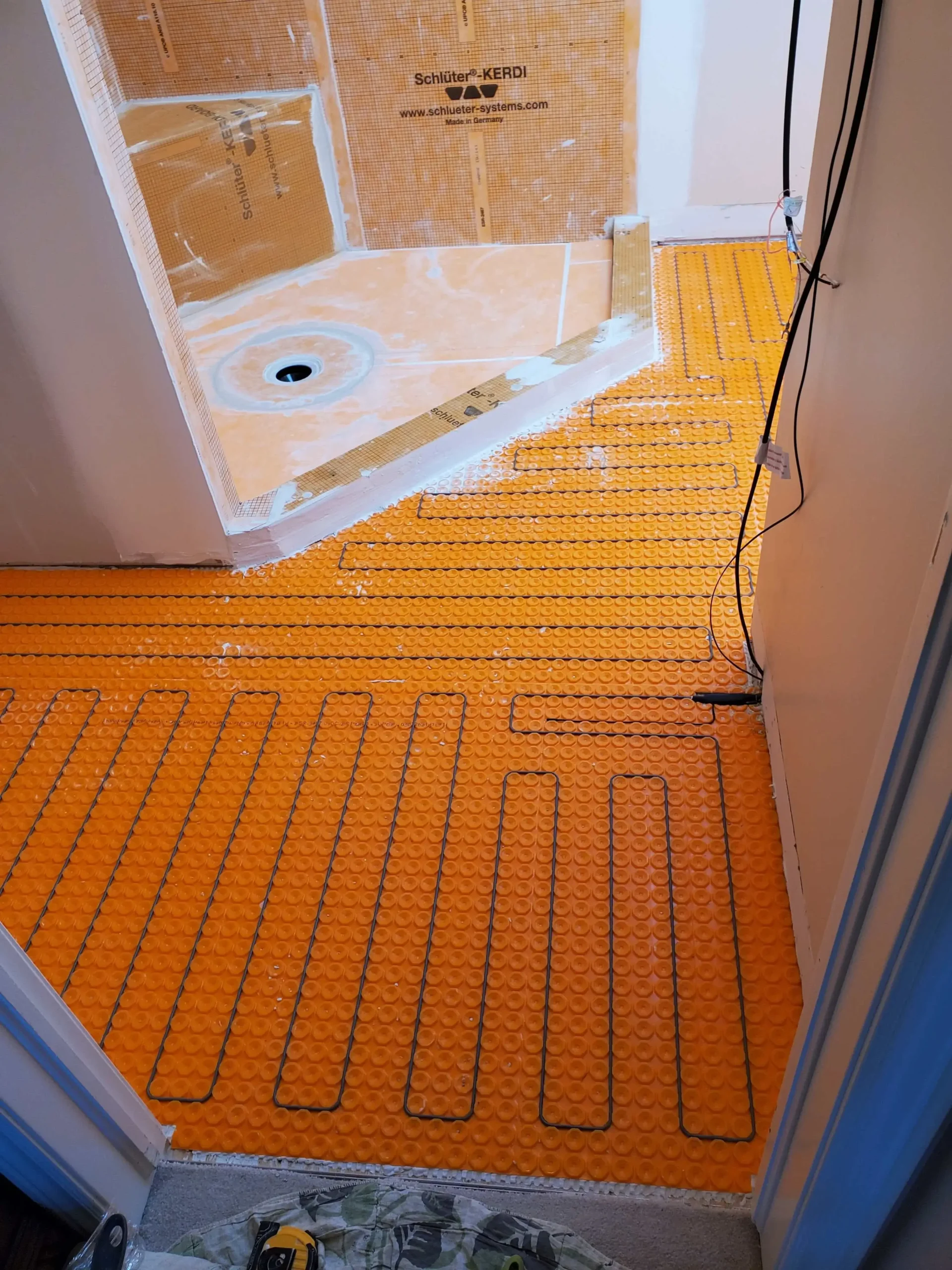
Tile is hard and cold. In-floor heating systems can address the cold problem, but they add cost to the installation.
Warmth & Feel
Vinyl plank feels warmer. Both literally — it doesn’t get as cold in winter — and visually. A wood-look LVP floor has a warmth and softness that tile typically doesn’t replicate, even with wood-look tile options.
If you have radiant in-floor heating under tile, the temperature difference largely disappears. But that’s an additional investment.
Installation
Vinyl plank is faster and less disruptive to install. Most LVP products are floating floors — they click together and sit on top of the subfloor without adhesive. This means less mess, faster installation, and the ability to go over some existing floors without full removal.
Tile requires thinset mortar, proper substrate preparation, curing time, and grouting. A tile floor can’t be walked on for 24 hours after installation and shouldn’t be fully wet for 72 hours while the grout cures.
Vinyl plank can often be installed in a day. A tile floor of the same size takes two to three days minimum.
Cost
Generally speaking, vinyl plank costs less than tile when you factor in both materials and installation. A quality LVP product runs $3–$7 per square foot for materials, with installation adding $2–$4 per square foot. Tile materials range from $2 to $15+ per square foot, with installation typically running $6–$15 per square foot depending on complexity.
That said, mid-range tile and mid-range LVP end up in similar price territory. The biggest cost difference shows up at the high end — premium large format porcelain is significantly more expensive to buy and install than premium LVP.
Longevity & Resale
Tile lasts longer and adds more resale value. A well-installed tile floor can last 50 years or more. LVP, even quality products, is typically rated for 20–30 years of normal use.
For kitchens and bathrooms, tile tends to be what buyers expect and what appraisers give credit for. For basements and living areas, LVP is perfectly acceptable and in some cases preferred because of its comfort underfoot.
Our Recommendation by Room
| Room | Recommendation |
| Bathroom Floor | Tile |
| Shower Walls & Floor | Tile (always) |
| Kitchen Floor | Either |
| Laundry Room | Either |
| Basement | LVP |
| Livingroom/Bedroom | LVP |
| Mudroom/Entryway | Tile |
The Bottom Line
Tile is the right choice when durability, water resistance, and long-term value are the priority. Vinyl plank is the right choice when comfort, warmth, faster installation, and budget are the priority.
For most Norfolk County homes, the answer is actually both — tile in the bathrooms and kitchen, vinyl plank in the living areas, basement, and bedrooms. That combination gives you the best of both materials in the rooms where each performs best.
We install both every week. If you’re trying to decide what’s right for your project, give us a call at 519-909-6658 or email info@stylesoftiles.com. We’re happy to talk through your specific situation and give you an honest recommendation.
Luxury Vinyl Plank the winner for you? Visit our page to browse and purchase your luxury vinyl plank today!
Styles of Tiles installs tile and luxury vinyl plank flooring across Port Dover, Simcoe, Tillsonburg, and surrounding Norfolk, Haldimand, and Brant County communities.